Home / Blog / Thinning vs texturising scissors: what barber suppliers should stock
Thinning vs texturising scissors: what barber suppliers should stock
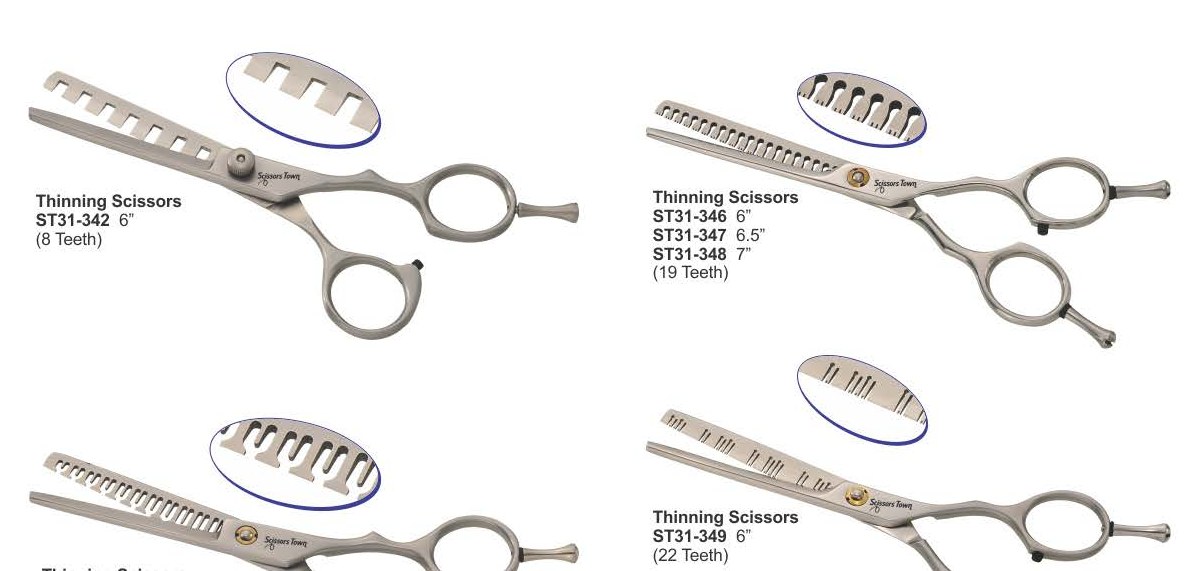
Most barbers own at least one thinning scissor alongside their cutting scissors. If you supply barber shops or are building your own scissor brand, knowing the difference between thinning and texturising models helps you stock the right mix.
What is the difference?
Both have one plain blade and one toothed blade. What changes is the teeth.
- Thinning scissors have many fine, closely spaced teeth. Each cut removes a small amount of hair and blends it, so they are used to soften lines and remove bulk without leaving visible gaps.
- Texturising scissors, sometimes called chunking scissors, have fewer and wider teeth. Each cut removes more hair and leaves visible texture, which barbers use to create movement and separation.
As a rule, the more teeth a scissor has, the less hair it removes per cut.
Tooth shape matters too
Teeth can be plain, notched or V-shaped. Notched and V-shaped teeth hold the hair as the blades close, so it does not slide along the blade. Decorative designs, such as fish-bone and dragon-face thinning scissors, combine a working tooth pattern with a distinctive look that sells well in retail.
Steel and edge
The plain blade does the cutting, so steel grade and sharpening matter as much as on a cutting scissor. Our guide to 410C, 420C and 440C steel explains how grade affects edge life and price.
Building a range
- A fine thinning scissor for blending
- A texturising scissor with fewer, wider teeth
- Left-hand versions for left-handed barbers
- Pet thinning scissors for dog groomers
- Economy thinning scissors with plastic handles for training kits and value ranges
When you order, list the tooth count or catalogue reference, the length, the steel grade and the finish for each model, and approve samples before bulk production. See our full range of barber, thinning and pet grooming scissors.